
Symbolism of the color red in antiquity
Red is supposedly the first color percieved by Man. Brain-injured persons suffering from temporary color-blindness start to perceive red before they are able to discern any other colors. Neolithic hunter peoples considered red to be the most important color endowed with life-giving powers and thus placed red ochre into graves of their deceased. This explains funds of skeletons embedded in up to 10 kg of red powdered ochre. Neolithic cave painters ascribed magic powers to the color red. The word "magic" ("Zauber" in German) translates to "taufr" in Old Norse and is related to the Anglo-Saxon "teafor" meaning "red ochre". It can be stipulated that they painted animals in red ochre or iron oxide to conjure their fertility.
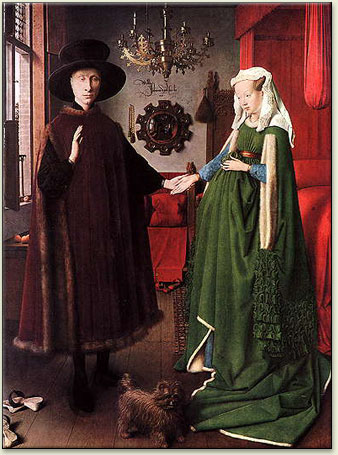
Protective powers of the color red against evil influence were common belief. Objects, animals and trees were covered in red paint, warriors painted their axes and spear-catapults red to endow the weapons with magic powers. Some of the Australian aborigines abide by this custom up to the present times. Neolithic hunters and germanic warriors used to paint their weapons and even themselves in blood of slain animals. Roman gladiators drank blood of their dying adversaries to take over their strength. In other cultures, the newly born were bathed in blood of particularly strong and good looking animals.Red painted amulettes or red gems, such as ruby or garnet, were used as charms against the "evil eye". Wearing a red ruby was supposed to bring about invincibility. Red bed-clothes were customary in Germany up to the Middle Ages as protection against the "red illnesses", such as fever, rashes or even miscarriages (famous example is the painting Arnolfini Wedding by Jan Van Eyck, dated 1434).

Phoenix unifies the destructive symbol of fire associated with war and hate with its rebirth and its life-giving powers. Phoenix surrenders to fire and steps out of it cleansed and endowed with a new life.
Red garlands and red scarfs were part of wedding customs in many cultures. Red wedding gown was en vogue in Nurnberg of the 18th century, but this tradition goes back to roman times: Roman brides were wrapped in a fiery red veil, the flammeum, which should warrant love and fertility. Greek, Albanian and Armenian brides wear red veils even today. Chinese brides are wearing red wedding gowns and are carried to the ceremony in a red litter. The bride walks on a red carpet and is greeted by the groom who lifts her red veil. Neighbours bring red eggs to the couple after a child is born.
Red rose is the symbol of love and fidelity. According to the Greek legend red roses arised from blood of Adonis who was killed by a wild boar on a hunt. In Greek mythology red rose was a symbol for the cycle of growth and decay, but also for love and affinity. Red rose is dedicated to Aphrodite, the Greek goddess of love and daughter of Zeus and also to Roman goddess Venus. In Christianity the red rose is associated with the Cross and the bloodshed.
There are also negative connotations of this color. Israelites in biblical times painted their doorframes in red blood to scare demons. Red in ancient Egypt was the color of the desert and of the destructive god Seth who inpersonated the Evil. "Making red" was synonymous with killing someone, evil doings were refered to as "red affairs". Salvation from Evil is the subject of an ancient Egyptian charm: "Oh, Isis, deliver me from the hands of all bad, evil, red things!" Writers of Egyptian papyri used a special red ink for nasty words.
Good and bad qualities are combined in Phoenix, the firebird. In Egypt, China and Central America it was associated with cleansing and revival. In China its name was the "Vermilion Bird" or the Substance of Fire" and promised luck and longevity.
(main yellows page) - vermilion - red lead - Madder lake (alizarine) - realgar - Red ochre