

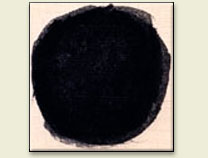
Brief description of Indigo:
Indigo was quite often used in European easel painting since the Middle Ages and written evidence also points to its use by the Romans. Increasingly, analysis has identified indigo present not only in underpaint, but also in top paint layers.
It has high tinting strength but may fade rapidly when exposed to strong sunlight. It is best used full strength and protected from ultraviolet light beneath a UV-protecting varnish or glass.
Indigo was prepared from plants until the end of 19th century. Since 1870 it has been manufactured synthetically. It has fair tinting strength and may fade rapidly when exposed to strong sunlight. Worked in tempera or beneath varnish it can be very stable.
Names for Indigo:
| Word origin: | The name "Indigo" comes from Greek indicon = from India. | ||||||
| Non-English names: |
|
||||||
| Origin: | plant | ||||||
| Chemical name: | Indigotin (2,2'-Biindolinyliden-3,3'-dion) |
Example of use by artists:
It's in Your Jeans
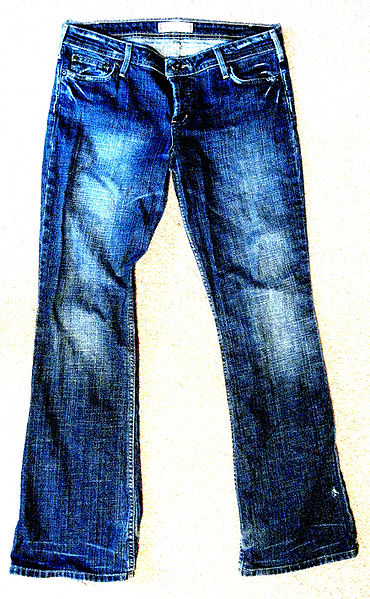
Used for four millennia in the Middle East, Indigo provided the 'blue' of Denim Jeans. The word "jeans" comes from the French phrase bleu de Gênes, literally the blue of Genoa. Jeans fabric, or denim, originated independently in two places: the French town of Nîmes, which 'denim' owes its name to; and in India, where trousers made of denim material were worn by the sailors of Dhunga, which came to be known as dungarees. At around the same time, denim trousers were made near Turin (Italy), during the Renaissance, and were popularised in the 16th century. These trousers were sold through the harbour of Genoa. Traditionally, jeans are dyed to a blue color using indigo dye. Approximately 20 million tons of indigo are produced annually for this purpose, though only a few grams of the dye are required for each pair of trousers.
 Sections: