

Brief description of Red Ochre:
Red ochre is composed mailnly of iron oxide, hematite which word comes from Greek, hema meaning blood. Used from prehistory and throughout history, these permanent pigments can be safely mixed with other pigments. Ochres vary widely in transparency; some are quite opaque, while others are valued for their use as glazes.
Names for Red Ochre:
| Alternative names: | iron oxide mixed with different quantities and qualities of clay and other minerals is called red bole, cinabrese. Artificial variety: mars red | ||||||
| Word origin: | The name "Red Ochre" comes from Greek ochros = yellow, pale yellow. | ||||||
| Non-English names: |
|
||||||
| Origin: | natural earth and artificial | ||||||
| Chemical name: | Anhydrous iron(III)-oxide |
Example of use by artists:
Beauty just needs earth
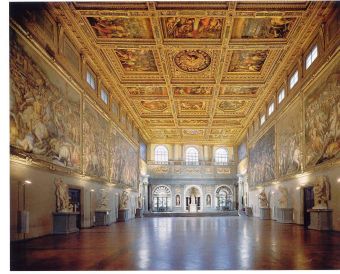
Hall of 500 in Florence, 1572
Medieval and Renaissance frescoes as the once painted by Giorgio Vasari on the walls of the Hall of 500 in Florence were made mainly by earth pigments, among which, red ochre.
 Sections: